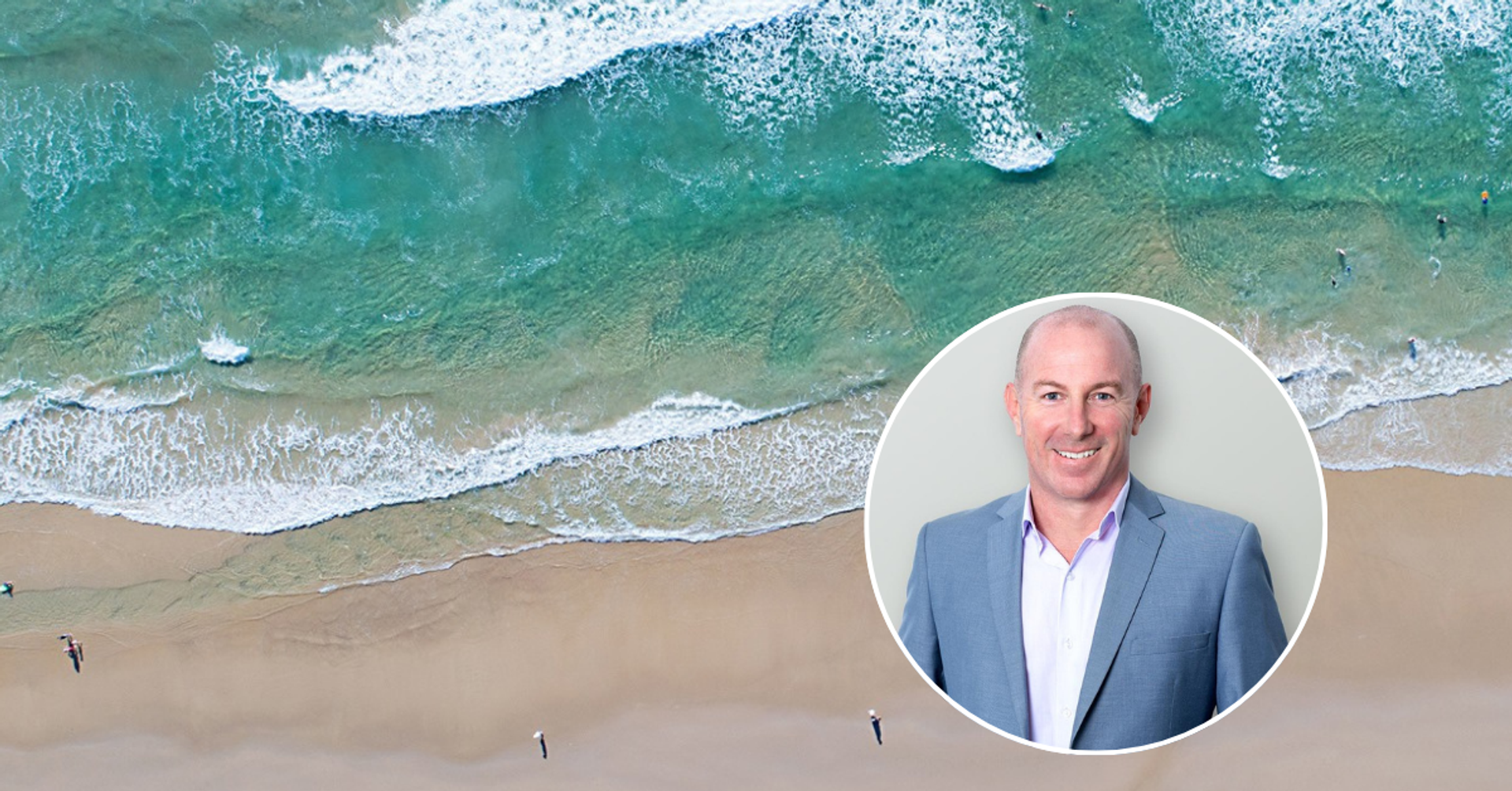
Belle Property Noosa, Coolum & Marcoola: Reducing Complexity to Unlock Growth
Benjamin Ling
22 January 2026
When I speak with principals about changing property management systems, the hesitation is rarely about ambition. It’s about disruption. Most can see there’s a better way, but the perceived cost of change feels higher than the pain of staying put.
That’s why I wanted to sit down with Ben Radcliff, Principal of Belle Property Noosa, Coolum & Marcoola.
Ben’s business wasn’t underperforming. His team was capable. The intent was there. But the weight of complexity was pulling him back into the weeds every day.
“It just kept landing in my basket”
I asked Ben how he’d convince another Belle principal, or any principal, who feels there must be a better way but is afraid to make the leap.
His answer wasn’t theoretical.
“I used to get called multiple times daily,” he said. “Complexities, issues, trust account questions. It all just landed in my basket.”
Traditional software, layered integrations and fragmented communication channels had turned property management into a constant exception-handling exercise. Money sat in trust accounts longer than it needed to. Reconciliation felt heavy. Mid-month and end-of-month were events, not processes.
Since moving to Ailo, that changed.
“Reconciliation is daily. It’s simple. Mid-month and end-of-month just happen. It’s a blip on the radar now.”
What replaced that noise was space. Space to work on the business rather than in it. Space for the team to focus on relationships.
That shift showed up externally sooner than Ben expected. He was recently complimented by another Sunshine Coast agent whose properties they manage.
“He said, whatever you’re doing, it’s excellent. I’ve got properties all over the country, and your communication and service have stepped up more than anyone else.”
Capability was never the problem
From my perspective, Ben’s team always had the capability. What Ailo unlocked was consistency.
Ben agreed.
“The trust accounting and money side of it used to feel like foreign ground. People were scared of it,” he said. “Now it’s completely transparent and visible to everyone. Owners and tenants.”
We circled back to complexity, because that word kept coming up.
Before the switch, communication lived everywhere. Email. Teams. Outlook. WhatsApp. Individual inboxes and personal workflows. Every handover meant context loss.
“When someone left, went on maternity leave or travelled, all that knowledge left with them,” Ben said. “You couldn’t collaborate properly around a tenant or owner’s wishes.”
Now, the work lives in one place. Conversations, context and decisions stay with the property, not the person.
“Thankfully, my team doesn’t tag me in anything anymore,” he said. “They don’t need to.”
Teachability over heroics
One question I always ask is what surprised someone after making the change. Not in the demo, but once the dust settled.
Ben didn’t hesitate.
“I underestimated how simple the learning curve was,” he said.
This mattered more than it might sound. Ben is wired for change. His team isn’t chasing novelty. They value consistency.
“The fact that you can bring in people with no PM background, young people, people from other countries, and vault them in quickly, that was huge,” he said. “It’s not a steep learning curve.”
The impact was tangible. Ben used to spend significant time in the PM team. Now, he’s politely asked to leave.
“They’re like, we know what we’re doing. You don’t need to be here.”
That’s not disengagement. That’s confidence.
Relationship, not remote control
Ben was blunt about something else. Many solutions he was offered were complex by design, built for scale at the expense of relationships.
“That’s not the future of our industry,” he said. “This is relationship-based. Owners and tenants want to know who they’re dealing with.”
Systems shouldn’t replace relationships. They should protect them.
From where I sit, that’s the real win. When principals can step back without things falling apart, scalability stops being theoretical.
2026 looks different
I asked Ben whether 2026 looks different now that Ailo is embedded.
His answer wasn’t about headcount or tech. It was about posture.
He entered the year with a rejuvenated team, fresh leadership at Head of Department level, and momentum already built.
“It’s enabled everyone to be growth-focused,” he said. “Senior PMs, assistants, inspections coordinators. They’re all thinking about growth now.”
He paused, then summed it up.
“I’ve got six BDMs now, not six property managers who never left their desks.”
The takeaway
What stood out to me in this conversation wasn’t a feature or a metric. It was the absence of noise.
When complexity is removed, teams don’t just move faster. They move differently. They stop firefighting and start building.
Ben Radcliff didn’t need more effort from his team. He needed a system that stopped getting in their way.
And that, more than anything, is what changed the trajectory of Belle Property Noosa, Coolum & Marcoola.